
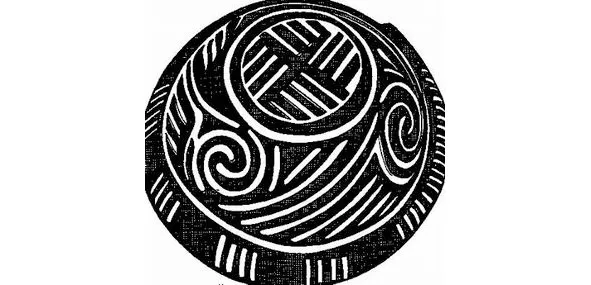
Tripolie ornament
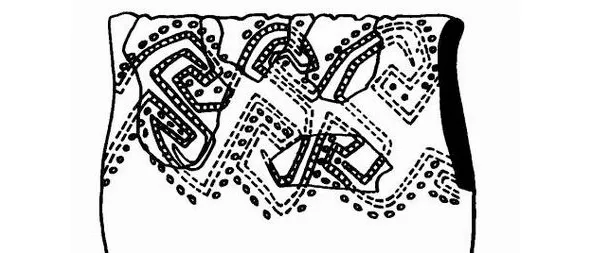
Ornament of Seroglazov ceramics (Neolithic)
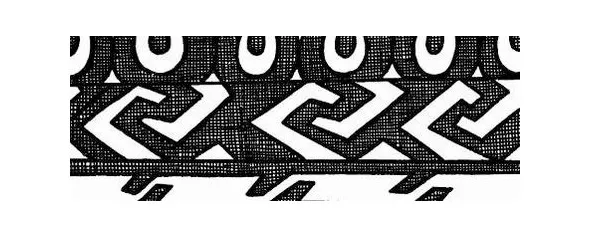
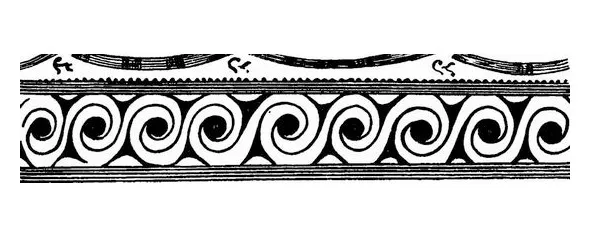
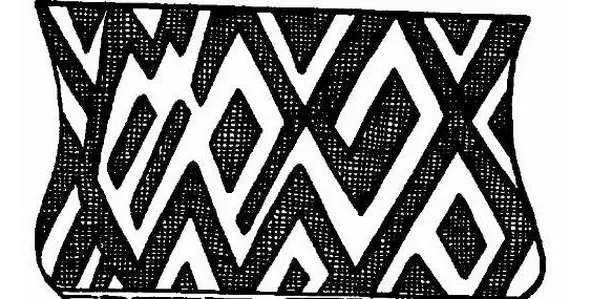
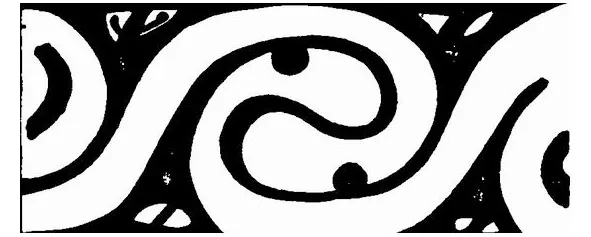
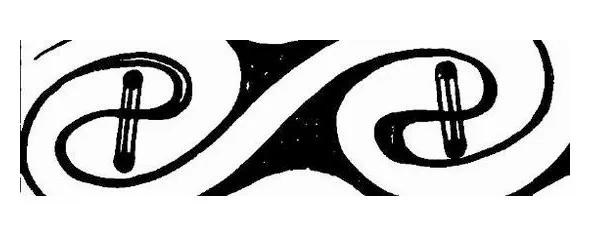
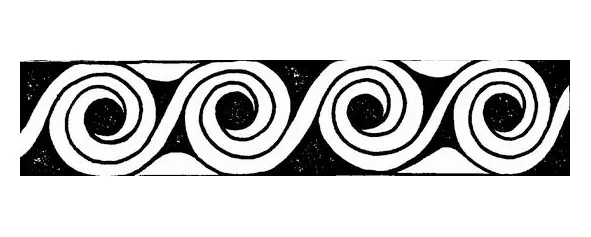
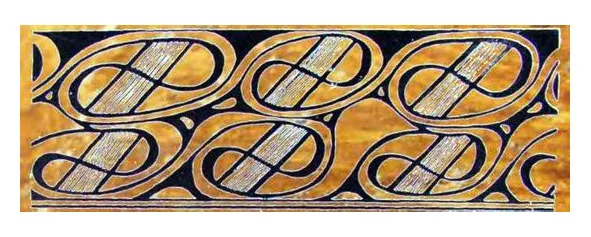
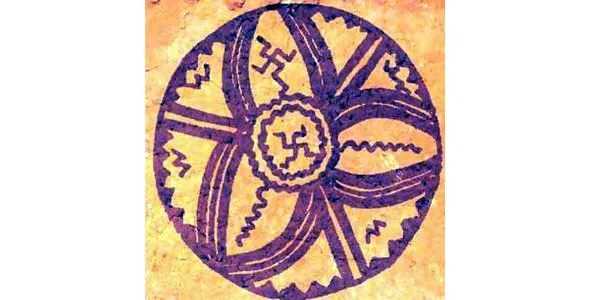
Among these sacred signs, first of all, it is worth mentioning the meander spiral, the swastika used in its simplest version or complicated by new composite elements in the form of additional processes on each curved side of the cross, and the peculiar transformation of the meander motif, represented by the S-characteristic ceramic decor next to S- shaped “geese” (tab. 5). It must be said that throughout the history of Tripoli culture, in any case, at its early and middle stages, two main directions in the development of ceramic ornament can be distinguished.
On the one hand, this is a geometric angular style, using various variations of the meander pattern and most clearly developing the archaic rhombus-meander ornament. On the other hand, this is a drawing of smooth, wilted forms, gravitating to a circle.
V. N. Danilenko writes that: “By the time of the spread of the most ancient painted utensils, the beginning of the bifurcation of the development paths of the Trypillian culture was an obvious fact,” but it manifested itself most vividly when in the eastern half of the Trypillian area – on the Middle Dnieper region, in the Bug region and partly in the Middle Dniester region in the ethno-historical process “a powerful eastern component was included – the early links of the ancient pit culture”. It was here that by the time of the beginning of the transformation (in the process of mutual influences) of both the Trypillian and Yamnaya cultures, which served as the basis for many cultures of the Bronze Age, that circle of ornamental motifs was formed, rather limited and not exhaustive, no doubt, of the entire richness of the Tripillian ceramics decor, but nevertheless less characteristic of this culture, with which materials of subsequent historical periods are to be compared in the future. This is a meander and its varieties: meander spiral, intricately drawn cross-swastika, S-shaped figures – “jibs”.